
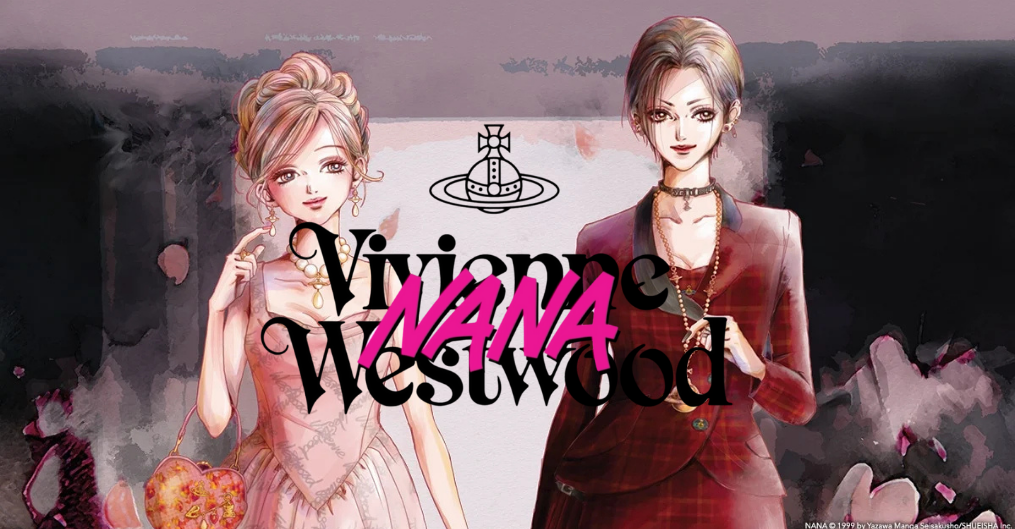
Vivienne Westwood x “Nana”: Nostalgia Served, But Did We Really Get the Drop?
Vivienne Westwood finally teamed up with Nana — yes, the punky manga that defined a generation of early-2000s Asian teens — for a collection of clothing, jewelry, and accessories. The hype was real. TikTok had 44 million posts referencing it, Xiaohongshu racked up over 420 million impressions, and Westwood’s own Instagram post collected 234,000 likes.
So did the brand nail it? Eh… kind of.
Fans of Ai Yazawa’s cult classic had been dreaming about this official crossover for years. The characters Nana Osaki and Nana Komatsu were basically punk mannequins in Westwood’s wardrobe long before the collab existed. Yazawa herself confirmed she had been collecting Vivienne pieces for years, meaning the manga was basically a walking tribute to the brand. Finally, the fantasy was real.
But then reality kicked in. The drop was messy. Some regions got the collection early, notification systems failed, and the Giant Orb Lighter, the holy grail of the release, sold out instantly with only 250 units made. Online forums exploded with frustration, accusations of scalpers, and the eternal question: why is nostalgia so expensive?
Designs split opinions. Certain archival pieces like Rocking Horse platforms, Armor Rings, and Stormy Jackets stayed true to Nana’s punk DNA. Yet others criticized the collection for being too soft, leaning into a late-1990s aesthetic while charging full luxury prices. Some fans even whispered that it felt like a cash grab disguised as homage — limited edition hype meets corporate strategy.
Still, the collaboration proved something: when nostalgia meets scarcity, people will buy. Even if they grumble online. Queues outside stores, hauls shared by bloggers, and social media buzz showed that Nana’s influence runs deep. Vivienne Westwood’s growing focus on Asia — Shanghai Fashion Week 2024, exhibitions across China — only cemented the fact that cross-generational nostalgia is a global commodity.
In short: the collab scratched the itch for die-hard fans, ignited online debates, and reminded everyone that cultural memory can be just as powerful as the clothes themselves.
But for some, it also left the question hanging: did we get fashion, or just a very expensive trip down memory lane?
